
1) Reference PID2023-151163NA-I00. Functional genomics of mole forelimb adaptation: a synthetic biology approach. Ministerio de Ciencia, Innovación y Universidades.
GROUP DESCRIPTION
Our research aims to understand how genomic changes translate into developmental phenotypes during evolution, with a particular focus on how the non-coding genome modulates gene expression across tissues and species. We use state-of-the-art approaches, including 3D genome analysis, single-cell technologies, and epigenetics, combined with comparative genomics, to uncover conserved and divergent regulatory mechanisms. Our findings are validated in vivo using transgenic mouse models, linking regulatory changes to phenotypic traits. Our primary model is the mole, a species with unique adaptations to subterranean life, including eye degeneration, hypoxia tolerance, and specialized limbs. Notably, female moles develop ovotestes that produce high levels of testosterone, contributing to their adaptation. We previously generated a chromosome-level genome of the Iberian mole (Talpa occidentalis) and showed that ovotestis development is associated with changes in 3D regulatory domains of sex-specific genes (Real et al., Science, 2020). Using this model, we integrate comparative genomics and functional approaches to study gene regulatory evolution in vivo.


GROUP OBJECTIVES
- Decipher how evolutionary changes in cis-regulatory elements shape developmental gene expression.
- Reconstruct and compare gene regulatory networks at single-cell resolution across species.
- Functionally validate regulatory evolution in vivo using transgenic models.
- Investigate the evolution and function of large regulatory landscapes using synthetic genomics.
- Define the principles governing the evolution of gene regulatory landscapes.
RESEARCH GROUP MEMBERS

My journey into the world of science began with a Biology degree, followed by a PhD in Genetics and Evolution at the University of Granada (Spain) in the lab of Prof. Rafael Jiménez. For my postdoctoral research, I moved to Germany and joined the lab of Prof. Stefan Mundlos at the Max Planck Institute for Molecular Genetics (MPIMG) in Berlin. During this time, we sequenced the genome of the Iberian mole at the chromosome-scale level, opening new possibilities for genomic studies in this iconic species. This work contributed to my promotion as a junior group leader at the MPIMG at the end of 2022. In 2023, I returned to Spain to establish my own hybrid research lab at the Andalusian Center for Developmental Biology (CABD), where we integrate experimental and computational biology to uncover how changes in the regulatory genome drive evolutionary adaptations. Our work bridges developmental biology, genomics, and evolutionary theory together with functional validations in vivo, pushing the boundaries of what we know about trait evolution.
Beyond science, I am a devoted mother of two and a strong advocate for work-life balance. Outside work, I enjoy spending time with my kids and finding moments of peace through yoga. I believe that balancing curiosity, family, and personal well-being is the key to both happiness and scientific creativity.
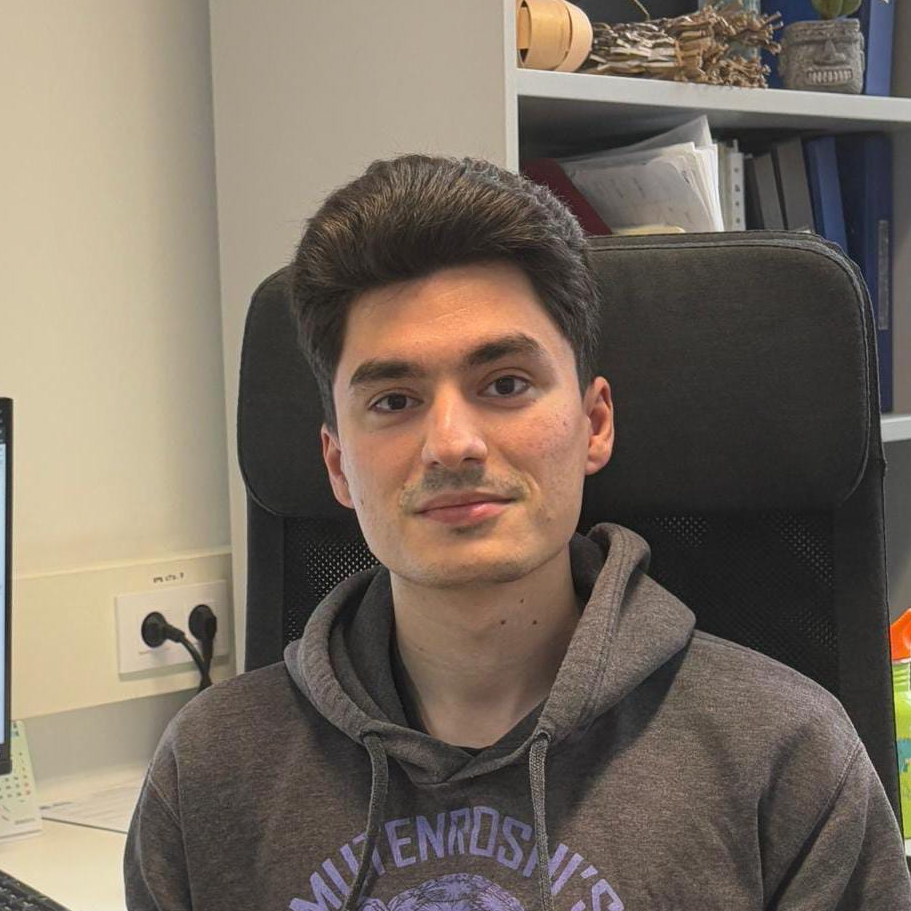
I am a Ph.D. student in the Real Lab. I graduated from the Universidad de Córdoba (UCO) with a B.S. in Biochemistry in 2023, and then completed a Master’s in Omic Data Analysis and Systems Biology at the Universidad de Sevilla (US) in 2024. My research interests focus on analyzing transcriptomic and epigenomic datasets to uncover the complex gene regulation mechanisms that drive gene expression.
Outside of the lab, I enjoy reading sci-fi and fantasy books and I am a video game enthusiast. I’ve explored a variety of sports, including boxing, hiking, padel, football, and climbing. I’m always looking for new challenges, stepping outside my comfort zone, and embracing opportunities to learn and grow.
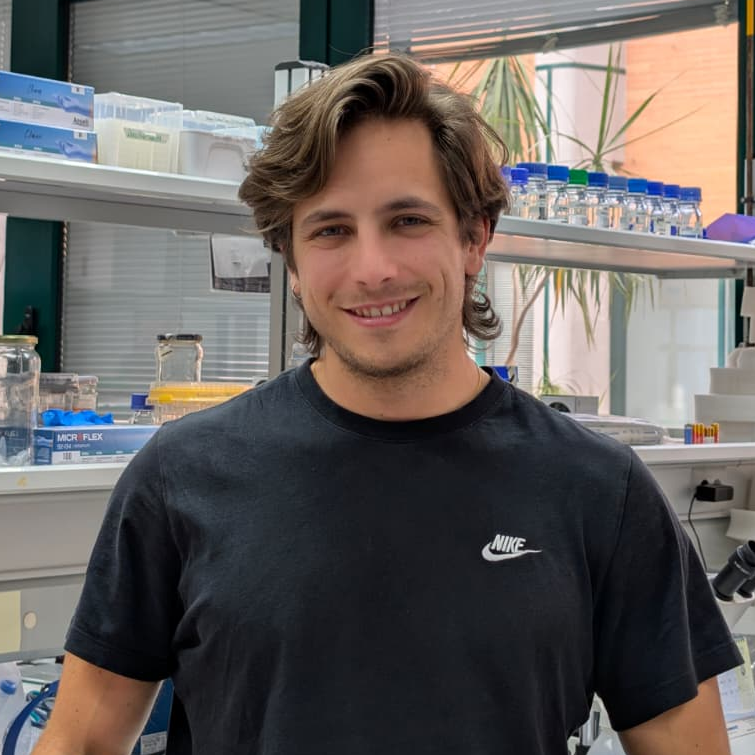
I am a Ph.D. student at RealLab, where I began my doctoral research with the support of the Spanish FPI predoctoral fellowship program. I hold a Bachelor’s degree in Biology and completed a Master’s in Biomedical Research in 2023, followed by a Master’s in Physiology and Neuroscience in 2024 from the University of Seville. My research interests are focused on understanding the mechanisms that govern gene expression and how disruptions in these processes contribute to the divergence between closely related species. I am also passionate about learning omics data analysis to uncover valuable insights for both research and clinical applications.
Outside of my academic work, I lead an active lifestyle, enjoying calisthenics, bouldering, reading, and meditating in the peaceful surroundings of nature.
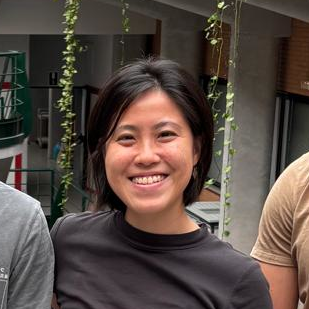
am interested in learning how our genomes encode various unique lifeforms. This led me to obtain a PhD at the University of California San Diego in 2025 under the supervision of Dr. Emma Farley. I studied non-coding regions in the genome known as enhancers, and how they regulate gene expression in development, disease and evolution.
I joined the Real Lab as a postdoctoral researcher in 2026 to study the fascinating Iberian mole which has evolved many specialized traits. I hope to uncover mechanisms for evolutionary adaptation by comparing the 3D genomic architecture and enhancers between moles and mice.
When I am not in the lab, I enjoy cooking food from various cuisines, knitting and exploring Spain!
RESEARCH LINES
1) Evolution of species-specific gene regulatory networks through genome-wide changes.
We investigate how evolutionary changes in gene regulation shape transcriptional outputs at single-cell resolution by integrating scRNA-seq, scATAC-seq, and 3D genome data from developing mole and mouse limbs. Using computational and deep-learning approaches, we reconstruct cell-type-specific gene regulatory networks and identify species-specific regulatory changes.
2) Assessing the evolution of specific regulatory landscapes in vivo.
We investigate how the evolution of large regulatory landscapes shapes developmental traits by using synthetic genomics, combined with 3D genome analysis and advanced genome editing. By engineering and replacing extensive genomic regions between species in vivo, we directly test how changes in regulatory architecture impact gene expression and phenotype. This strategy provides a powerful framework to dissect how complex regulatory systems evolve while preserving essential functions and generating species-specific adaptations.

PROJECTS
PUBLICATIONS
- Irene Mota-Gómez*, Juan Antonio Rodríguez*; et al; Francisca M. Real, Rafael Acemel, Blanche Capel, Marc A. Marti-Renom, and Darío G. Lupiáñez. Chromatin spatial analysis by METALoci unveils sex-determining 3D regulatory hubs. Nat Struct Mol Biol. 2026. https://doi.org/10.1038/s41594-026-01749-z
- Magdalena Schindler*, Christian Feregrino*; et al; Darío Lupiáñez, Stefan Mundlos, Francisca M. Real. Comparative Single-Cell Analyses Reveal Evolutionary Repurposing of a Conserved Gene Program in Bat Wing Development. Nat. Ecol. Evol. 2025 Sep;9(9):1626-1642. doi: 10.1038/s41559-025-02780-x.
- Bai-Wei Lo, Francisca Martinez-Real, Andreas Magg, John Wise, Stefan Mundlos, Paolo Franchini. 2025. Genome-wide demographic analyses of balaenid whales revealed complex history of gene flow associated with past climate oscillation. Genome Biol. and Evol. Volume 17, Issue 5, May 2025. DOI: 10.1093/gbe/evaf081
- A. Hurtado*, I. Mota-Gómez*, M. Lao*, F. M. Real, J. Jedamzick, M. Burgos, D. G. Lupiáñez, R. Jiménez, F. J. Barrionuevo. 2024. Complete male-to-female sex reversal in XY mice lacking the miR-17∼92 cluster. Nat Commun. May 7;15(1):3809.doi: 10.1038/s41467-024-47658-x.
- Magdalena Schindler, Marco Osterwalder, Izabela Harabula, Lars Wittler, Athanasia Tzika, Dina Dechmann, Martin Vingron, Axel Visel, Stefan Haas, Francisca M. Real. 2023. Induction of kidney-related gene programs through co-option of SALL1 in mole ovotestes. Development. 150 (17). DOI: 10.1242/dev.201562
- Chiara Anania*, Rafael D. Acemel*, Johanna Jedamzick; et al; Francisca M. Real, Darío G. Lupiáñez. 2022. In vivo dissection of a clustered-CTCF domain boundary reveals developmental principles of regulatory insulation. Nature Genetics. 54 (1026–1036). https://doi.org/10.1038/s41588-022-01117-9
- Francisca M. Real*, Miguel Lao-Pérez*; et al; Rafael Jiménez, Francisco Barrionuevo. 2022. Cell adhesion and immune response, two main functions altered in the transcriptome of seasonally regressed testes of two mammalian species. J Exp Zool B Mol Dev Evol. 10.1002/jez.b.23142. DOI: 10.1002/jez.b.23142
- Francisca M. Real, Stefan A. Haas, Paolo Franchini; et al; Stefan Mundlos*, Darío G. Lupiáñez*. 2020. The mole genome reveals regulatory rearrangements associated with adaptive intersexuality. Science. Vol 370, Issue 6513, pp. 208-214. DOI: 10.1126/science.aaz2582
- Barrionuevo FJ*, Hurtado A*, Kim GJ*, Real FM, Bakkali M, Kopp JL, Sander M, Scherer G, Burgos M, Jiménez R. 2016. Sox9 and Sox8 protect the adult testis from male-to-female genetic reprogramming and complete degeneration. Elife. 5:e15635. DOI: 10.7554/eLife.15635
- Real FM, Sekido R, Lupiáñez DG, Lovell-Badge R, Jiménez R, Burgos M. 2013. A microRNA (mmu-miR-124) prevents Sox9 expression in developing mouse ovarian cells. Biol Reprod. 89(4):78. DOI: 10.1095/biolreprod.113.110957
