The EvoDevOmics Network is supported by the grant RED2024-153825-T funded by MICIU/AEI/ 10.13039/501100011033
GROUP DESCRIPTION
Life on Earth displays a breathtaking diversity of forms — from the armoured shell of a turtle to the elaborate filtering apparatus of a lamprey larva; from the paired fins of a shark to the complex brain of a mammal. This remarkable variety is the result of hundreds of millions of years of evolution, driven by changes in the genome and their interaction with developmental programmes and the environment. Yet one of the deepest unsolved questions in biology remains: how do genuinely new structures arise? How does a genome change to produce not just a gradual refinement of an existing feature, but something truly novel? Understanding the origin of evolutionary novelties is essential to understanding the history of animal life — including our own origins as vertebrates.
To address these questions, the Comparative Developmental Genomics Lab (Champi Lab) combines genomics, transcriptomics, and evolutionary developmental biology (evo-devo) in a comparative approach to study key evolutionary transitions across animals. We use a broad range of models, with a special focus on jawless vertebrates such as hagfish and lampreys, and non-model organisms like turtles, whose unique body plans offer exceptional opportunities to study the genomic and developmental basis of evolutionary innovation.


GROUP OBJECTIVES
Our main objective is to understand how evolutionary novelties arise at the genomic and developmental level. Specifically, we aim to: (1) identify the genomic changes — including gene family expansions, co-option of regulatory elements, and emergence of novel genes — associated with the origin of major morphological innovations; (2) characterize the developmental programmes that underlie these innovations; and (3) reconstruct ancestral genomic and developmental states to infer the evolutionary trajectory of key novelties across vertebrate evolution.
RESEARCH GROUP MEMBERS
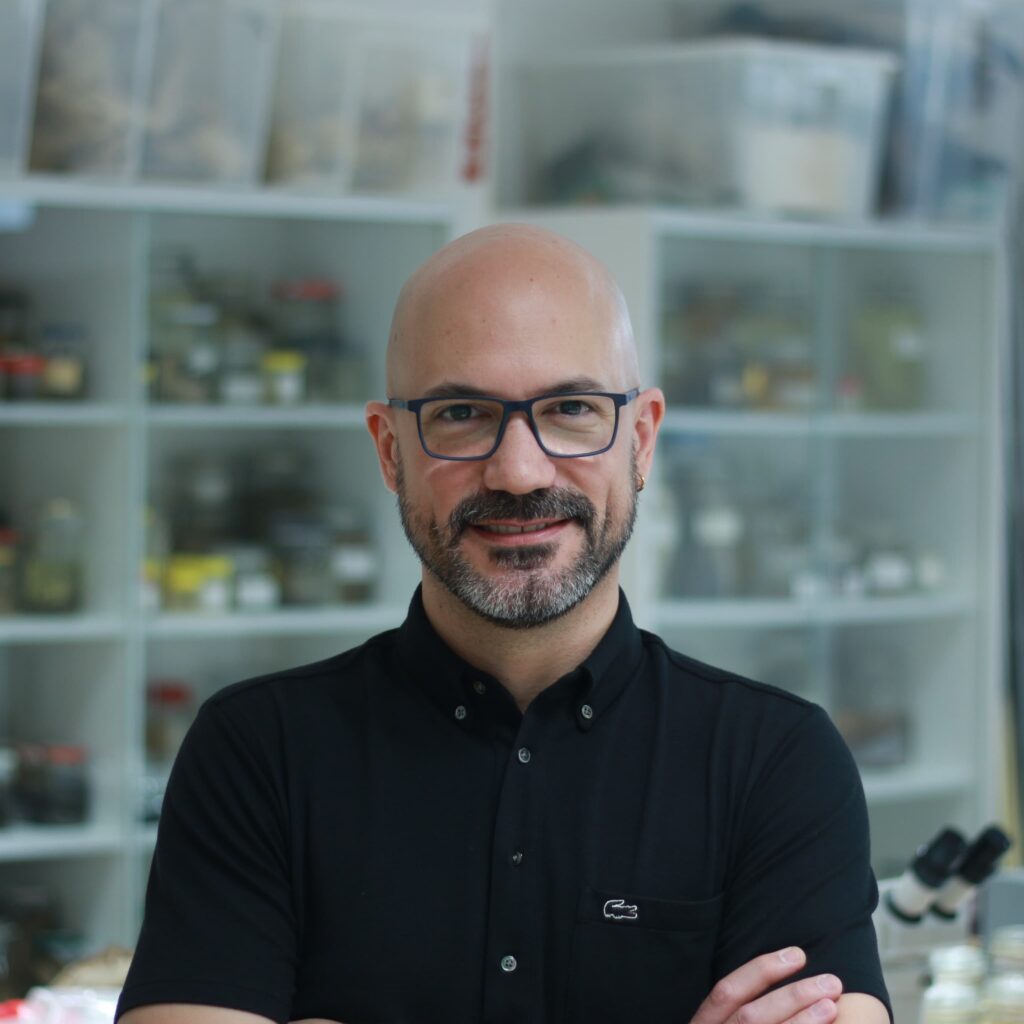
Ever since I first saw amphioxus embryos developing under the microscope during my PhD at the University of Barcelona, I fell in love forever more with Evo-devo. After more than 20 years since, I still feel amazed by the display of endless forms most beautiful of metazoans. I am particularly interested in understanding how a genome changes in order to make a phenotypic change beyond gradual microadaptations.
In my free time I like playing Pokémon cards with my son, and painting Warhammer armies to play with friends.
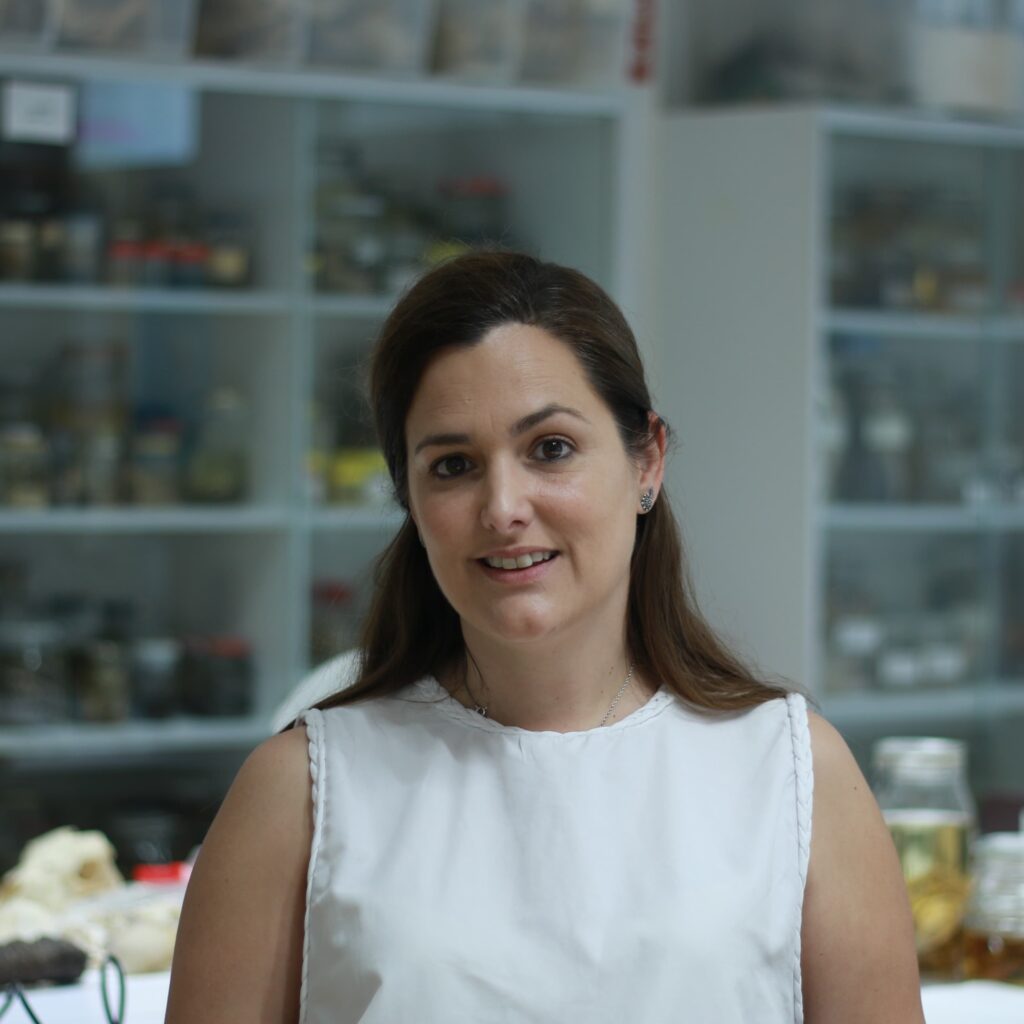
I studied Biology and completed my PhD at the University of Salamanca (Spain), I continued my postdoc experience in the UCL and NML (LGC) at UK and after 10 years I decided to go back to the sunny land and joined the Champi Lab at UMA. I moved from human genetics to non-model animals. I am passionate about the contribution that bioinformatics can make to the study of these models, particularly through single-cell approaches!
I have a habit of remembering random facts and dates for no reason. But on a more normal note, my favourite way to relax is with a coffee and a book.
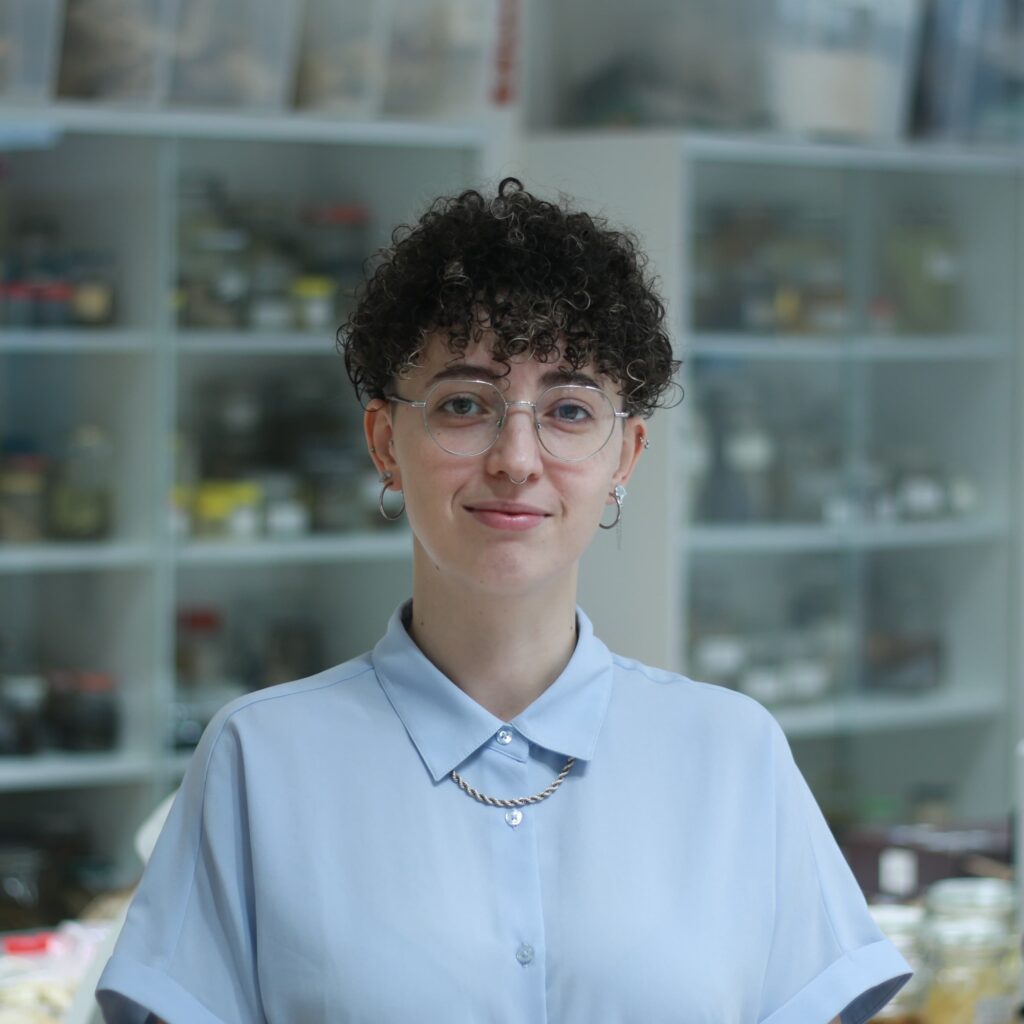
I studied a bachelor’s in Biology and a Master’s in Cellular and Molecular Biology at the University of Málaga. I am currently doing my PhD under the supervision of Champi and Borja Fernández, where I study the evolutionary history of conventional myosins, with a special focus on the emergence, diversification and functional evolution of this gene family and their putative impliations in their potential implications in adaptability diversification of organs such as the heart across vertebrates.
Something about me, I’m a professional enjoyer, so whatever you want to do, I’m in!
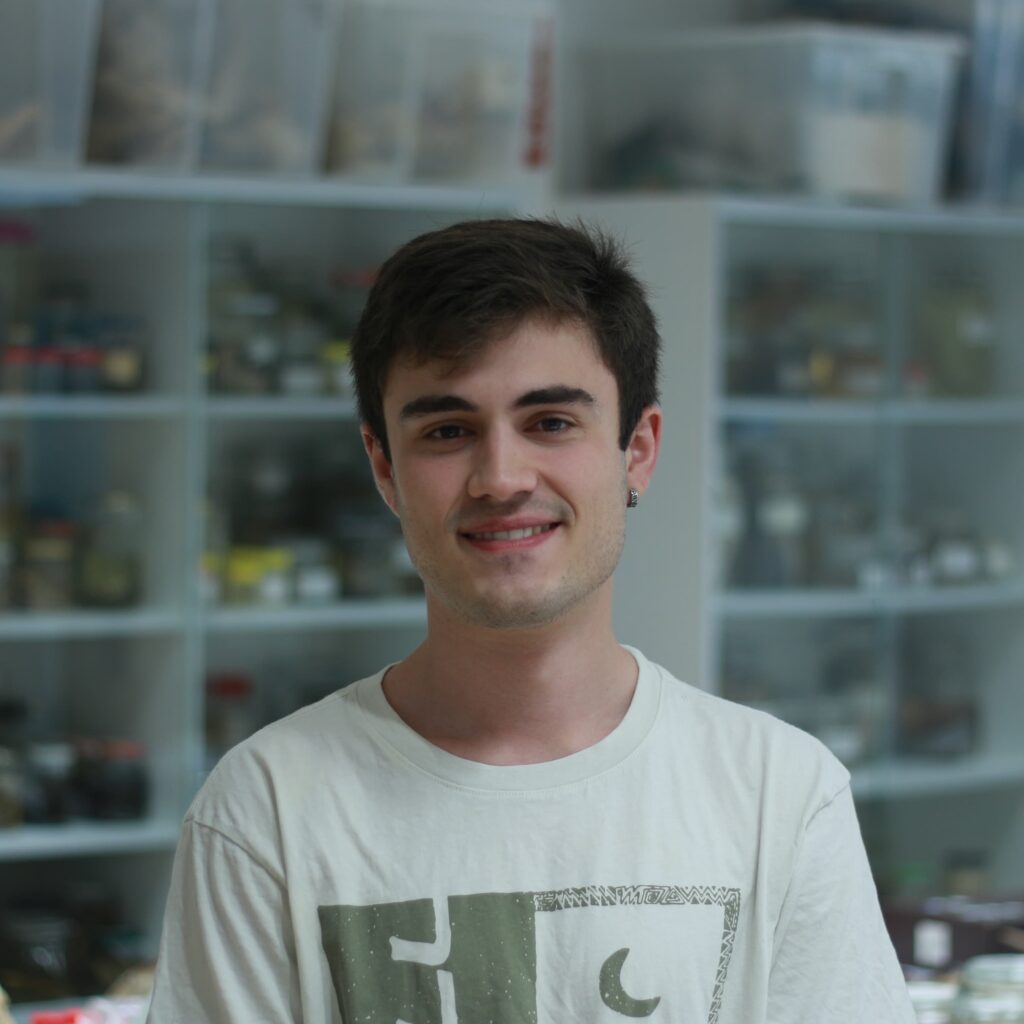
I recently graduated in Biology at UMA (Málaga), where I had the chance to join the Champi Lab for my bachelor’s thesis. Currently I am enrolled in the Master’s Degree in Cellular and Molecular Biology Master’s at UMA. As part of my master’s thesis, I am developing my bioinformatic skills applied to evo-devo studies. The origin of phenotypic diversity in animals fascinates me, so after completing my master’s degree, I plan to continue my academic career as a PhD student in evo-devo.
On a personal note, I am probably the nerdiest videogame encyclopedia you can stumble upon!
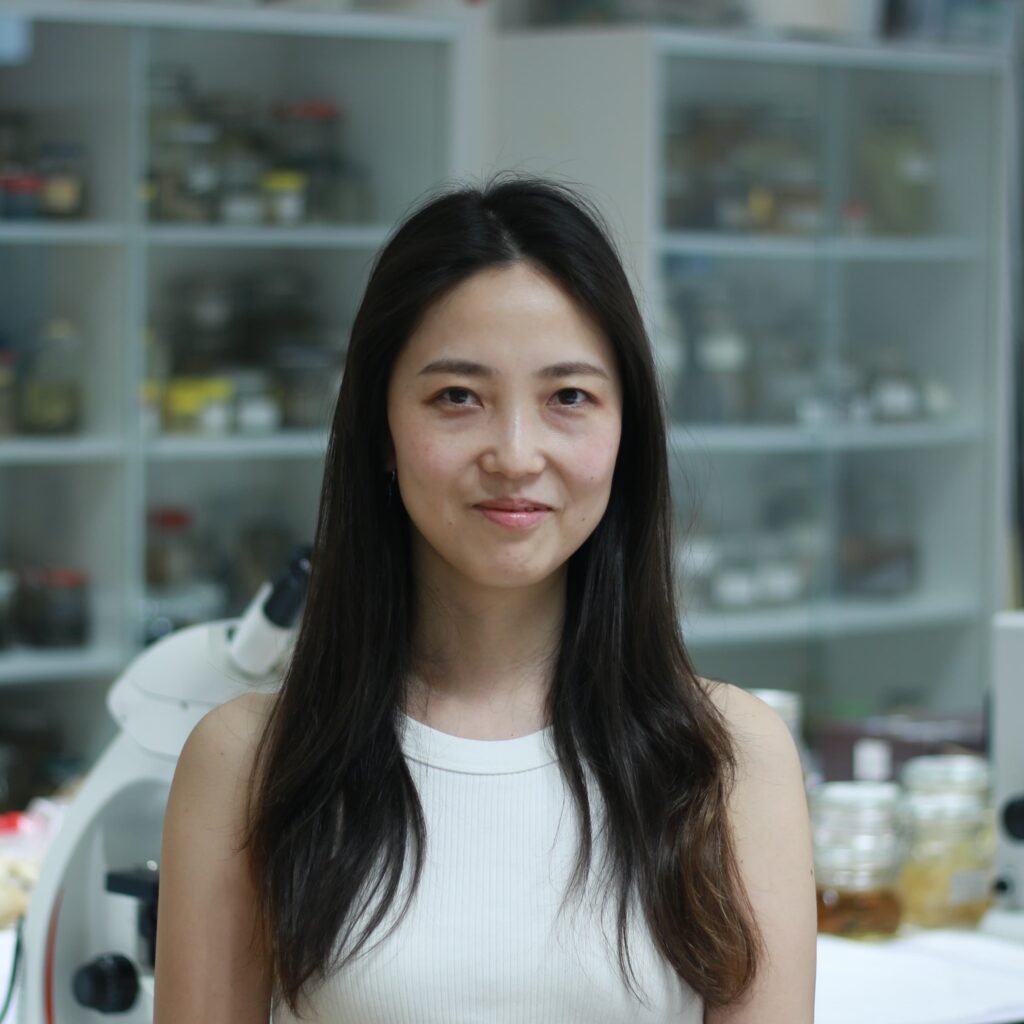
I graduated from Okayama University, in Japan, in 2016. During my bachelor, I worked in the laboratory of Shigeru Kuratani during an internship where I learned about evolutionary morphology, with a focus on anatomy of sharks, knowledge that allowed me to join the Champi Lab in 2025, where I take care of the shark eggs and work as a lab manager in general.
What I like doing in my free time the most is drawing animals and plants, and also watching series and reading books.
RESEARCH LINES
- Evolutionary origins of novelties in vertebrates and other metazoans We study how entirely new morphological structures and body plans arose during animal evolution, with a current focus on the origin of the turtle carapace and the vertebrate haemogenic endothelium.
- Genome evolution of vertebrates We focus on the genomic changes that accompanied the origin and early diversification of vertebrates, using cyclostomes (hagfish and lampreys) as key model organisms to understand the impact of whole-genome duplications.

PUBLICATIONS
- Nakanishi Y, Tamura M, Sugahara F, Kawada N, Ishikawa R, Yamakami S, Maruyama-Watanabe A, Pascual-Anaya J, Kuraku S, Saitou T, Fukui M, Koyama H, Kuratani S, Rijli FM, Suzuki DG, Murakami Y (2026) Comparing Trigeminal Nerve Branches in Lampreys and Gnathostomes Reveals Evolutionary Changes in Vertebrate Oral Nerve Innervation. Journal of Comparative Neurology 534(3):e70154. https://doi.org/10.1002/cne.70145
- Yu D, Ren Y, Uesaka M, Beavan AJS, Muffato M, Shen J, Li Y, Sato I, Wan W, Clark JW, Keating JN, Carlisle EM, Dearden RP, Giles S, Randle E, Sansom RS, Feuda R, Fleming JF, Sugahara F, Cummins C, Patricio M, Akanni W, D’Aniello S, Bertolucci C, Irie N, Alev C, Sheng G, de Mendoza A, Maeso I, Irimia M, Fromm B, Peterson KJ, Das S, Hirano M, Rast JP, Cooper MD, Paps J, Pisani D, Kuratani S, Martin FJ*, Wang W*, Donoghue PCJ*, Zhang YE*, Pascual-Anaya J* (2024) Hagfish genome elucidates vertebrate whole-genome duplication events and their evolutionary consequences. Nature Ecology & Evolution 8(3):519-535. https://doi.org/10.1038/s41559-023-02299-z
- Tamura M, Ishikawa R, Nakanishi Y, Pascual-Anaya J, Fukui M, Saitou T, Sugahara F, Rijli FM, Kuratani S, Suzuki DG, Murakami Y (2023) Comparative analysis of Hmx expression and the distribution of neuronal somata in the trigeminal ganglion in lamprey and shark: insights into the homology of the trigeminal nerve branches and the evolutionary origin of the vertebrate jaw. Zoological Letters 9(1):23. https://doi.org/10.1186/s40851-023-00222-9
- Sugahara F, Pascual-Anaya J (2023) High-quality total RNA extraction from early-stage lamprey embryos. Biotechniques 74(5):243-278. https://doi.org/10.2144/btn-2023-0004
- Pascual-Anaya J*, Böhmer C (2023) Evolution of Cyclostome Hox Clusters. In: Hox Modules in Evolution and Development (ed. Ferrier DEF). CRC Press, pp. 121-. https://doi.org/10.1201/9781003057215-6
- Annona G, Sato I, Pascual-Anaya J, Osca D, Braasch I, Voss R, Stundl J, Soukup V, Ferrara A, Fontenot Q, Kuratani S, Postlethwait JH, D’Aniello S (2022) Evolution of the nitric oxide synthase family in vertebrates and novel insights in gill development. Proceedings of the Royal Society B: Biological Sciences 289(1980):20220667. https://doi.org/10.1098/rspb.2022.0667
- Pascual-Anaya J*, D’Aniello S*, Bertrand S* (2022) Editorial: New Approaches in Chordate and Vertebrate Evolution and Development. Frontiers in Cell and Developmental Biology 10:917101. https://doi.org/10.3389/fcell.2022.917101
- Takagi W, Sugahara F, Higuchi S, Kusakabe R, Pascual-Anaya J, Sato I, Oisi Y, Ogawa N, Miyanishi H, Adachi N, Hyodo S, Kuratani S (2022) Thyroid and endostyle development in cyclostomes provide new insights into the evolutionary history of vertebrates. BMC Biology 20(1):76. https://doi.org/10.1186/s12915-022-01282-7
- Sugahara F, Murakami Y, Pascual-Anaya J, Kuratani S (2021) Forebrain Architecture and Development in Cyclostomes, with Reference to the Early Morphology and Evolution of the Vertebrate Head. Brain Behaviour and Evolution 96(4-6):305-317. https://doi.org/10.1159/000519026
- Sugahara F, Pascual-Anaya J, Kuraku S, Kuratani S, Murakami Y (2021) Genetic Mechanism for the Cyclostome Cerebellar Neurons Reveals Early Evolution of the Vertebrate Cerebellum. Frontiers in Cell and Developmental Biology 9:700860. https://doi.org/10.3389/fcell.2021.700860
