
- “El origen de los animales: una aproximación de biología celular (ANIMALORIGIN)”
PI: Elena Casacuberta and Iñaki Ruiz Trillo
Funding: 345.000 €
Duration: 01/09/2024-31/08/2027
Project number: PID2023-153273NB-I00
Funded by: Ministerio de Ciencia, Innovación y Universidades - “Reconstructing the urmetazoan protein repertoire and interaction network: an integrative phylogenetic, proteomic, and biochemical approach (SINERGIA)”
PI: Pedro Beltrao, Christophe Dessimoz, Dirk Fasshauer and Iñaki Ruiz Trillo
Funding: 2.813.066 €
Duration: 01/08/2023-31/7/2027
Project number: CRSll5_216623/1
Funded by: Swiss National Science Foundation - «Search for the missing unicellular relatives of animals (MISSINGRELATIVES)”
PI: Iñaki Ruiz Trillo
Funding: 2.499.948 €
Duration: 01/07/2023-30/06/2028
Project number: 101097659 – MISSINGRELATIVES- ERC-2022-ADG
Funded by: European Research Council
GROUP DESCRIPTION
The Multicellgemome lab is interested in a fundamental biological question: how animal multicellularity evolved from a unicellular ancestor? To answer it, we study the closest unicellular relatives of animals, organisms that can reveal what life was like before the first animals evolved. By combining genomics, cell biology, and experimental tools, we explore how single cells first acquired the ability to cooperate, organize, and eventually give rise to multicellular animals.
Our research has shown that many of the molecular building blocks of animal life existed before animals themselves. We are now moving beyond a purely genomic perspective toward a more functional and systems-level view, asking how pre-existing genes were co-opted and repurposed under new regulatory landscapes to enable the emergence of multicellular animals. This shift allows us to address not only which components were present, but also how they were integrated into a new biological operating system. To do so, we develop genetic and cell-biological tools in emerging model systems. We are also searching for new, still-undiscovered lineages closely related to animals (“the Magnificent 8”) that could fill major gaps in our understanding of animal origins.
Ultimately, our goal is to uncover the principles that made animal multicellularity possible and to build a more complete evolutionary framework for understanding the origin of animals.
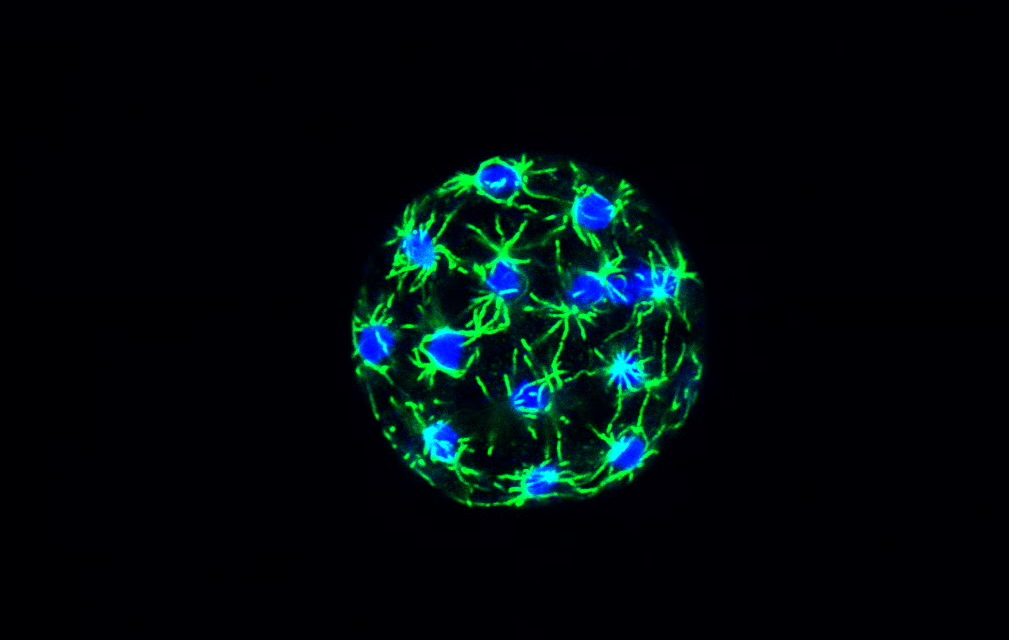

GROUP OBJECTIVES
Our objective is to understand how the unicellular ancestor of animals gave rise to multicellular life. We investigate this transition by reconstructing the pre-animal cellular toolkit, testing how ancestral genes and pathways were re-deployed in new regulatory contexts, and developing functional approaches in key unicellular holozoan lineages. In parallel, we seek to identify and characterize novel lineages closely related to animals that may represent critical missing pieces in the evolutionary history of multicellularity.
RESEARCH GROUP MEMBERS
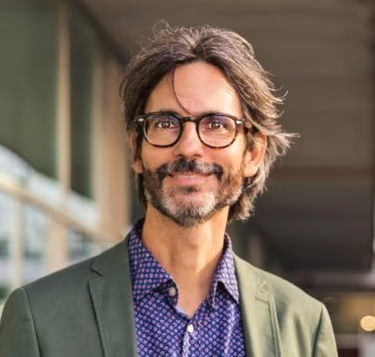
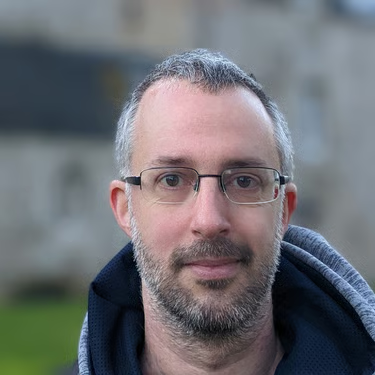
Iñaki was always fascinated by biology and evolution, and his research career shows that. From the origin of bilaterian animals, to the origin of multicellular organisms or the origin of eukaryotes, he has always been at the forefront of investigating key evolutionary transitions. He is an EMBO member and Adjunct professor at Department of Genetics, University of Barcelona. His research group is built on the principle of supporting diverse thinking and provides a space in which team members can grow according to their interests and features. Iñaki is always in a good mood and is famous as a prankster. He is always looking for new ideas and thrives on collaboration. A father of three, Iñaki is a dedicated family man and tries (or struggles) to find enough time for both family and work.
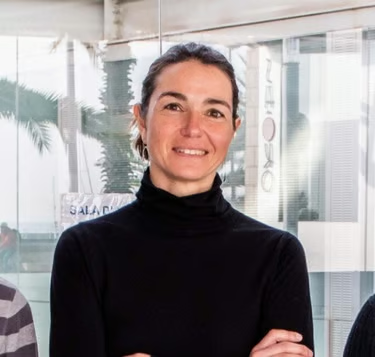
Elena enjoys many different scientific topics. She has worked on transposons, metamorphosis, and several model organisms, and now, she is the master of our efforts to develop emerging model systems. Growing up as one of the youngest siblings of a large family, it is no wonder that Elena takes a firm stand on the quest for equality and gender balance. She is also an avid bookworm, a writer, and a fan of meditation, and she is our best source for classical music gems and some trekking trips.
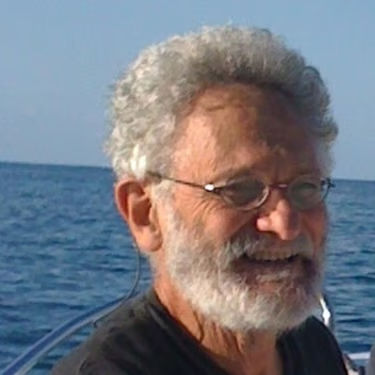
Claudio is a role model for all of us. He knows everything and remembers everything about molecular biology, metabolism, genetics, and evolution and he remembers it all!. He has lived and worked in many different places, from Uruguay and Italy to the UK, France, and Spain. But, more important than his deep knowledge and experience, is his positive attitude. In his 80’s, he has boundless energy driven by pure passion and enthusiasm. He is an avid reader, a curious mind searching for answers, and a great person to chat with and learn from.
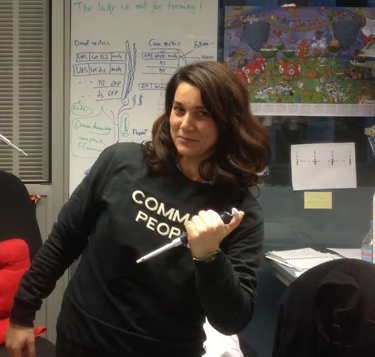
Meritxell is the master of the lab, the one responsible that all works well. From taking care of our organisms, the people and the lab, to perform some of the most difficult techniques or to sample in whatever place. Meri is naturally adventurous and loves the oceans and the Mediterranean sea. With a passion for art and music, she spends her free time learning new languages, travelling to new places and going to concerts.
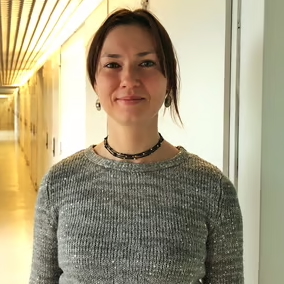
Vika is another “Swiss-knife”. She can work on the bench, try new methodologies or use the weirdest bioinformatics software available. Grown-up in Russia, with a PhD in Germany, she knows how to be efficient and stand up for what she thinks is right. She has a passion for Science and for the communication of Science. Indeed she regularly writes in her blog about her work, but with a personal touch. She is our “nanopore master”.
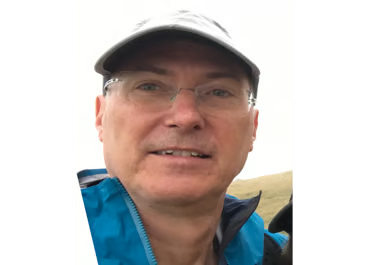
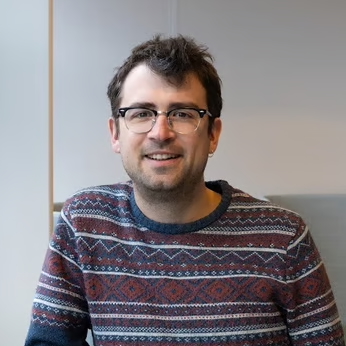
Nick is our Drosophila and cell adhesion expert. He has his own lab in Cambridge, but he is so affable and helpful to us that we consider him a member of the lab. Nick’s enthusiasm for science knows no bounds, but it doesn’t stop there. He’s the go-to person for engaging conversations on almost any topic; his curiosity is insatiable. He also actively participates in all our social activities, fostering a sense of unity among the team members. When he’s not in the lab, you can find him exploring the beauty of mountains.
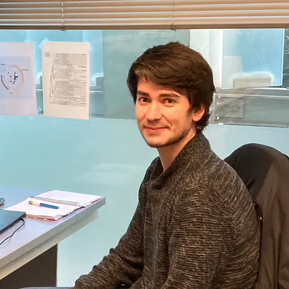
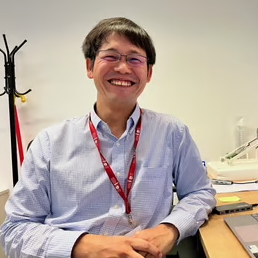
Gonzalo is our experimental evolution guy, together with Koryu. Originally from Madrid, Gonzalo has made a lasting impression in the lab for a few reasons. First, his sense of humor is renowned, and his jokes never (or almost never) fail to bring a smile to the faces of his fellow team members. Secondly, his appetite is legendary; there’s no challenge too big when it comes to his culinary feats.
Gonzalo is also a passionate communicator of science, always eager to participate in events to communicate science to the general public.
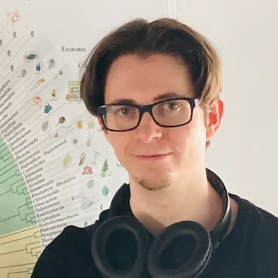
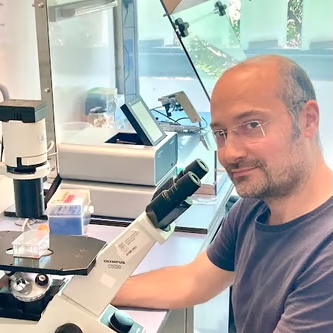
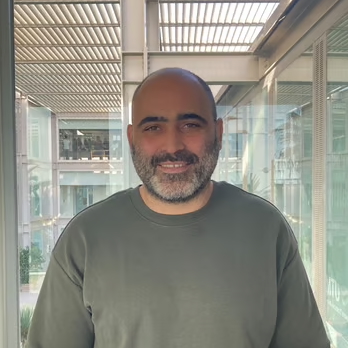
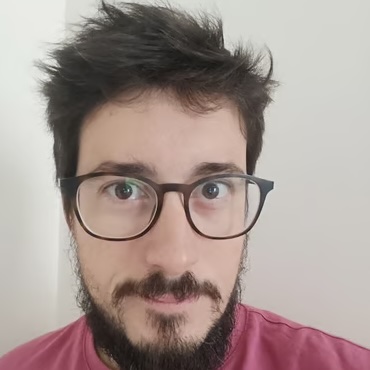
Fernando shares an uncanny resemblance to the esteemed Iñaki, albeit a “bit” younger, while having a very personal touch to everything he does. Fernando’s affinity for dark and black attire is a testament to his enigmatic and focused personality. He brings this same precision to his research, with a specialization in Corallochytrium, delving deep into the complexities of this intriguing taxon. Among Fernando’s renowned traits is his reputation as the slowest-ever eater in our group. Lunch breaks with him can turn into leisurely marathons, sometimes spanning a full two hours. It’s a testament to his dedication to savoring every bite and enjoying the simple pleasures in life.
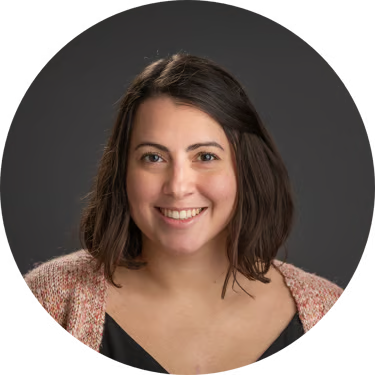
Jennah is a true marvel of organization and working In a country known for its passionate chaos, we all wonder at her organizational skills. Jennah takes the lead as our expert in «microbial interactions.» Her mission is to unravel whether microbial interactions played a role in the origins of animals. Jennah is also a wellspring of innovation and energy for our team. She’s highly active in providing ideas, contributing to our lab meetings, and nurturing a dynamic collaborative environment.
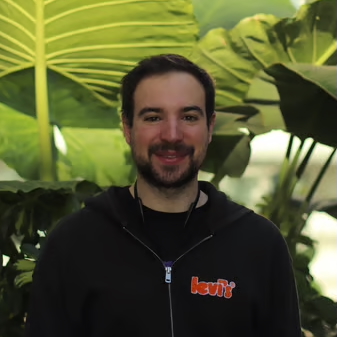
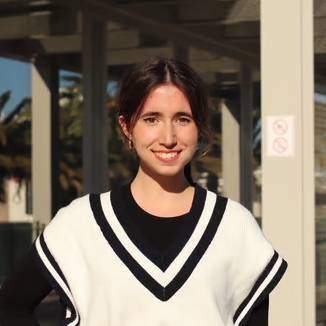
Marina embodies enthusiasm and courage, inspiring us all. As a child, she always wanted to be bigger, but now, she seems the youngest among us! Younger or not, she is always the first to raise her hand as a volunteer, eagerly taking on new challenges and venturing into uncharted territories. Beyond her scientific pursuits, Marina’s artistic soul shines brightly. Her poetic inclinations and passion add yet another layer to her multifaceted personality. Her eloquence and storytelling abilities weave a rich tapestry of words, captivating both the scientific and artistic realms. With her boundless enthusiasm, unwavering courage, and talent for artistic expression, Marina is a cherished member of our team. Her aim is to get and isolate some of the missing relatives of animals (the Magnificent 8) and get their genomes.
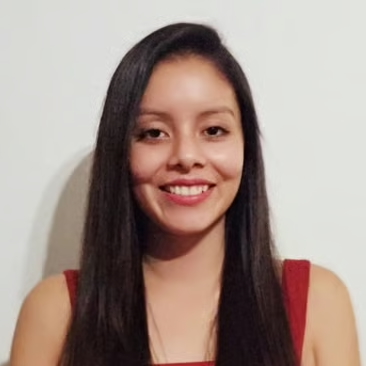
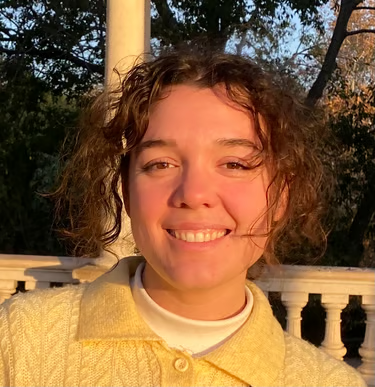
Alicia is full of surprises. One of her charming quirks is maintaining a list of things she likes and dislikes. Fortunately, science and diversity feature prominently on her list of likes! Hailing from Casares, a small town in Malaga, Alicia often points out the fun fact that you can type «Casares» only with your left hand on a keyboard, reflects her attention to the little things! Alicia’s longstanding commitment to understanding evolution led her to our team, where she is dedicated to unraveling some of the missing lineages of holozoans.
RESEARCH LINES
- Reconstruct the evolutionary steps leading to animal multicellularity by studying the closest unicellular relatives of animals and identifying the cellular and molecular features that predated the origin of Metazoa.
- Determine how pre-existing genes were co-opted and repurposed during this transition, with special emphasis on how new regulatory landscapes enabled novel forms of cellular cooperation, differentiation, and organization.
- Develop functional and cell-biological tools in emerging model systems in order to move beyond comparative genomics and experimentally test hypotheses about the origin of animal traits.
- Discover and characterize new lineages closely related to animals, including the still-uncultured “Magnificent 8,” to fill major gaps in our quest to address animal origins

PROJECTS
PUBLICATIONS
- Iñaki Ruiz-Trillo, Elena Casacuberta, Nicholas H Brown & Ricard Solé
A smartphone analogy to explore the origin of animals (2026)
The EMBO Journal - Patricia S. Ara, Elena Casacuberta, Claudio Scazzocchio, Iñaki Ruiz-Trillo and Sebastián R. Najle (2025) CRISPR-Cas9 genome editing in Corallochytrium limacisporum,a key species for understanding animal origins. Open Biol. 15: 250066
- Victoria Shabardina, Jennah E. Dharamshi, Patricia S. Ara, Meritxell Antó, Fernando J. Bascón, Hiroshi Suga, Wyth Marshall, Claudio Scazzocchio, Elena Casacuberta & Iñaki Ruiz-Trillo (2024)
Ichthyosporea: a window into the origin of animals. Communications Biology | (2024)7:915 - Iñaki Ruiz-Trillo, Koryu Kin, Elena Casacuberta (2023)
The Origin of Metazoan Multicellularity: A Potential Microbial Black Swan Event. Annual Review of Microbiology 77:499-516 - Núria Ros-Rocher, Ria Q. Kidner , Catherine Gerdt, W. Sean Davidson , Iñaki Ruiz-Trillo and Joseph P. Gerdt (2023) Chemical factors induce aggregative multicellularity in a close unicellular relative of animals. PNAS 110 (18): e2216668120
- Pei Zhang, Yuanzhen Zhu, Qunfei Guo, Ji Li, Xiaoyu Zhan, Hao Yu, Nianxia Xie, Huishuang Tan, Nina Lundholm, Lydia Garcia-Cuetos, Michael D. Martin, Meritxell Antó Subirats, Yi-Hsien Su, Iñaki Ruiz-Trillo, Mark Q. Martindale, Jr-Kai Yu, M. Thomas P. Gilbert, Guojie Zhang and Qiye Li (2023) On the origin and evolution of RNA editing in metazoans. Cell Reports 42 (2), 112112
- Eduard Ocaña-Pallarès, Tom A. Williams, David López-Escardó, Alicia S. Arroyo, Jananan S. Pathmanathan, Eric Bapteste, Denis V. Tikhonenkov, Patrick J. Keeling, Gergely J. Szöllősi & Iñaki Ruiz-Trillo (2022) Divergent genomic trajectories predate the origin of animals and fungi. Nature 609, 747–753 (2022)
- Omaya Dudin, Sébastien Wielgoss, Aaron M. New, Iñaki Ruiz-Trillo (2022) Regulation of sedimentation rate shapes the evolution of multicellularity in a close unicellular relative of animals. PLoS Biol 20(3): e3001551
- Aleksandra Kozyczkowska, Sebastian R. Najle, Eduard Ocaña-Pallarés, Cristina Aresté, Victoria Shabardina, Patricia S. Ara, Iñaki Ruiz-Trillo, Elena Casacuberta (2021)
- Stable transfection in protist Corallochytrium limacisporum identifies novel cellular features among unicellular animals relatives. Current Biology 31, 4104-4110
- Núria Ros-Rocher, Alberto Pérez-Posada, Michelle M. Leger and Iñaki Ruiz-Trillo (2021) The origin of animals: an ancestral reconstruction of the unicellular-to-multicellular transition.
Open Biol. 11: 200359. https://doi.org/10.1098/rsob.200359
