
- EIGJAPAN_JC2025-040. The European Interest Group (EIG) CONCERT-Japan.
(from April-2026 to March-2029). PI: Cristian Cañestro; Consortium Coordinator: Cristian Cañestro - ICREA Acadèmia Ac2215698. ICREA.
(from January-2023 to December-2027). PI: Cristian Cañestro - PID2022-141627NB-I00. Ministerio de Ciencia e Innovación (MICINN).
(from September-2023 to August-2026). PI: Cristian Cañestro - EU-JPI/P2C0I22022-135017-2. EU-JPI Oceans (PCI2022).
(from December-2022 to December-2025). PI: Cristian Cañestro - 2021 SGR 00372. Generalitat de Catalunya.
(from January-2022 to December-2024). PI: Cristian Cañestro; Coordinator: Jordi García-Fernández - PID2019-110562GB-I00. Ministerio de Ciencia e Innovación (MICINN).
(from June-2020 to May-2023). PI: Cristian Cañestro - PID_BFU2016-80601. Ministerio de Ciencia e Innovación (MICINN).
(from December-2016 to September-2020). PI: Cristian Cañestro - 15KK0272. Japan Society for the Promotion of Science (JSPS).
(from 2016 to 2018). PI: Hayato Yokoi; Investigator: Cristian Cañestro - PID_BFU2010-14875. Ministerio de Ciencia e Innovación (MICINN). (from 2011 to 2014). PI: Cristian Cañestro
- HNF2011-12. Heiwa Nakajima Foundation (Japan). (from 2011 to 2012). PI: Cristian Cañestro; Co-PI: Shigeki Fujiwara
GROUP DESCRIPTION
Understanding how genome evolution reshapes development is a central challenge in evolutionary biology. Our research focuses on how gene loss, genome reorganization, and gene regulatory network rewiring contribute to evolutionary innovation in chordates.
We use the tunicate Oikopleura dioica as a model system, a marine chordate with an extremely compact genome that has undergone extensive gene loss and genome scrambling. This organism provides a unique opportunity to study how developmental systems remain functional—and can even generate novel traits—despite radical genomic changes.
Our work has shown that gene loss is not merely a regressive process but can act as an adaptive evolutionary force, often coupled with gene duplication and regulatory innovation (“less, but more”). We investigate how the dismantling of major developmental pathways, such as retinoic acid, FGF, and Wnt signalling, reshapes gene regulatory networks and developmental processes.
More recently, we have expanded our research towards the study of genome architecture, particularly genome scrambling and its role in generating gene losses and adaptive genomic variation. In parallel, we explore how environmental stressors, including anthropogenic pollution or climate-driven ocean changes, impact development and gene expression in marine organisms.
By integrating EvoDevo, Genomics, and Ecological approaches, our goal is to understand how organisms adapt to both genomic and environmental perturbations.


GROUP OBJECTIVES
To understand how gene loss and genome reorganization reshape developmental gene regulatory networks and contribute to evolutionary innovation and environmental adaptation in marine animals, with special focus on chordates.
RESEARCH GROUP MEMBERS
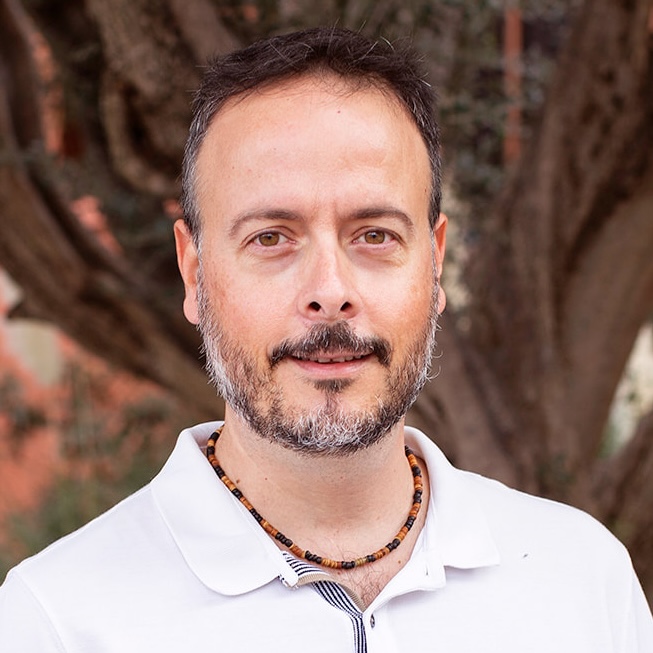
Group leader (Google Scholar & ORCID: 0000-0003-4623-8105 )
Associate Professor (Professor Agregat, categoria equivalent Profesor Titular) ICREA-acadèmia

Senior postdoctoral researcher (ORCID: 0000-0003-0632-9838)
I’m interested in understanding the impact of gene loss on the evolution and development of the heart in chordates, and how the deconstruction of the cardiopharyngeal gene regulatory network might have promote adaptive innovations in the transition from the ascidian-like sessile lifestyle in ancestral tunicates, the free-swimming lifestyle of appendicularians.
The results of my PhD have been published in the cover of Nature: https://rdcu.be/cBvIC
After a Juan de la Cierva postdoctoral fellowship in IBE developing CRISPR technologies in Blattella germanica, I’m currently back Cañestro’s lab developing new techniques of knockdown and gene silencing. I’m currently co-supervising the PhD of Constantino Andrés.
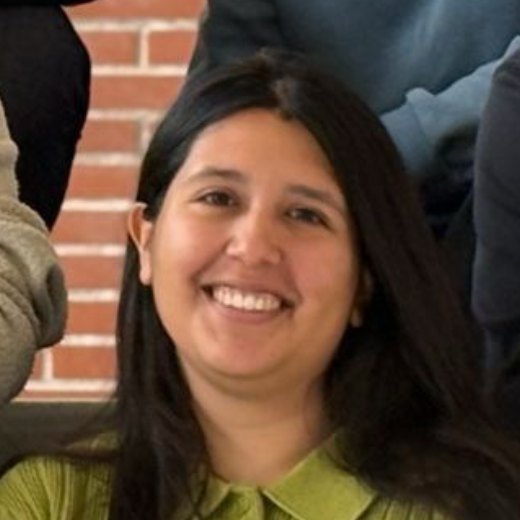
Senior postdoctoral researcher (MSCA fellow) (ORCID: 0000-0002-9502-9310 )
Currently, I’m interested in understanding the evolution of genome architecture and the genetic response of the defensome of marine embryos to environmental challenges, and currently I’m using Oikopleura dioica to understand its genetic adaptation to biotoxins produced by diatoms. My research combine both computational analysis as well as wet lab work. I’m currently co-supervising the PhD of Biel Cassà.

Postdoctoral fellow (ORCID: 0000-0002-1446-5832 )
Currently, I’m studying the evolution of tail muscle and its relationship with the transition from a sessile ascidian-like ancestor into a fully free-living appendicularian.
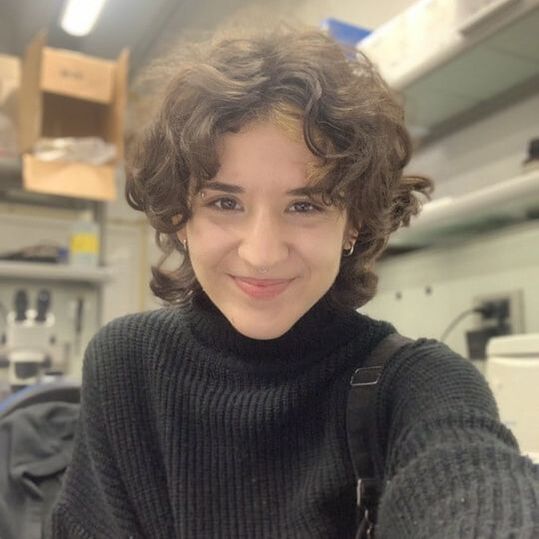
My PhD project aims to investigate the impact of marine noise pollution on the development of embryos of marine organisms and to characterize the adaptive genetic response to environmental stress.
My PhD project focusses on the development of new methodologies to manipulate genetically Oikopleura dioica, including CRISPR, and to transfer the new approaches to other model systems such other invertebrates or mouse cell culture.
My PhD project focuses on understanding how massive genome scrambling affects the evolution of genome architecture, with special attention to the generation of gene losses.
My master project focusses on the analysis of cardiogenic factors discovered after DGE of RNAseq after Hand knockdown in O. dioica
RESEARCH LINES
- Gene loss and evolutionary innovation
Study of gene loss as an adaptive force shaping developmental systems and organismal evolution (“less, but more”). - Evolutionary knockout (eKO) models
Use of naturally gene-reduced organisms to identify minimal gene toolkits and essential components of gene regulatory networks. - Genome architecture and genome scrambling
Investigation of how large-scale genomic rearrangements contribute to gene loss, regulatory changes, and adaptive evolution. - Developmental gene regulatory networks (GRNs)
Analysis of how GRNs are rewired following gene loss, with focus on pathways such as FGF, Wnt, and retinoic acid. - Environmental genomics and EcoEvoDevo
Study of how environmental stressors, including climate change and marine perturbations, affect development and genomic responses.

PROJECTS
PUBLICATIONS
- Sánchez-Serna G, Badia-Ramentol J, Bujosa P, Ferrández-Roldán A, Torres-Águila NP, Fabregà-Torrus M, Wibisana JN, Mansfield MJ, Plessy C, Luscombe NM, Albalat R, Cañestro C. Less, but More: New Insights From Appendicularians on Chordate Fgf Evolution and the Divergence of Tunicate Lifestyles. Mol Biol Evol 42(1):msae260 (2025). https://pubmed.ncbi.nlm.nih.gov/39686543/
- Plessy C*, Mansfield MJ, Bliznina A, Masunaga A, West C, Tan Y, Liu AW, Grašič J, del Río Pisula MS, Sánchez-Serna G, Fabregà-Torrus M, Ferrández-Roldán A, Roncalli V, Navratilova P, Thompson EM, Onuma T, Nishida H, Cañestro C*, Luscombe NM. Extreme genome scrambling in cryptic Oikopleura dioica species. Genome Res 34(3):426–440 (2024). https://doi.org/10.1101/gr.278295.123
- Ferrández-Roldán A, Fabregà-Torrus M, Sánchez-Serna G, Duran-Bello E, Joaquín-Lluís M, Bujosa P, Plana-Carmona M, Garcia-Fernàndez J, Albalat R, Cañestro C. Cardiopharyngeal deconstruction and ancestral tunicate sessility. Nature 599:431–435 (2021). https://pubmed.ncbi.nlm.nih.gov/34789899/
- Martí-Solans J, Godoy-Marín H, Diaz-Gracia M, Onuma TA, Nishida H, Albalat R, Cañestro C. Massive Gene Loss and Function Shuffling in Appendicularians Stretch the Boundaries of Chordate Wnt Family Evolution. Front Cell Dev Biol 9:700827 (2021). https://pubmed.ncbi.nlm.nih.gov/34179025/
- Marlétaz F, Firbas PN, Maeso I, Tena JJ, Bogdanovic O, Perry M, Wyatt CDR, de la Calle-Mustienes E, Bertrand S, Burguera D, Acemel RD, van Heeringen SJ, Naranjo S, Herrera-Ubeda C, Skvortsova K, Jimenez-Gancedo S, Aldea D, Marquez Y, Buono L, Kozmikova I, Permanyer J, Louis A, Albuixech-Crespo B, Le Petillon Y, Leon A, Subirana L, Balwierz PJ, Duckett PE, Farahani E, Aury JM, Mangenot S, Wincker P, Albalat R, Benito-Gutiérrez È, Cañestro C, Castro F, D’Aniello S, Ferrier DEK, Huang S, Laudet V, Marais GAB, Pontarotti P, Schubert M, Seitz H, Somorjai I, Takahashi T, Mirabeau O, Xu A, Yu JK, Carninci P, Martinez-Morales JR, Crollius HR, Kozmik Z, Weirauch MT, Garcia-Fernàndez J, Lister R, Lenhard B, Holland PWH, Escriva H, Gómez-Skarmeta JL, Irimia M. Amphioxus functional genomics and the origins of vertebrate gene regulation. Nature 564:64–70 (2018). https://doi.org/10.1038/s41586-018-0734-6
- Torres-Águila NP, Martí-Solans J, Ferrández-Roldán A, Almazán A, Roncalli V, D’Aniello S, Romano G, Palumbo A, Albalat R, Cañestro C. Diatom bloom-derived biotoxins cause aberrant development and gene expression in the appendicularian chordate Oikopleura dioica. Commun Biol 1:121 (2018). https://doi.org/10.1038/s42003-018-0127-2
- Martí-Solans J, Belyaeva OV, Torres-Aguila NP, Kedishvili NY, Albalat R*, Cañestro C*. Co-elimination and survival in gene network evolution: dismantling the RA-signaling in a chordate. Mol Biol Evol 33(9):2401–2416 (2016). https://doi.org/10.1093/molbev/msw118
- Albalat R*, Cañestro C*. Evolution by gene loss. Nat Rev Genet 17(7):379–391 (2016). https://doi.org/10.1038/nrg.2016.39
- Braasch I, Gehrke AR, Smith JJ, Kawasaki K, Manousaki T, Pasquier J, Amores A, Desvignes T, Batzel P, Catchen J, Berlin AM, Campbell MS, Barrell D, Martin KJ, Mulley JF, Ravi V, Lee AP, Nakamura T, Chalopin D, Fan S, Wcisel D, Cañestro C, Sydes J, Beaudry FE, Sun Y, Hertel J, Beam MJ, Fasold M, Ishiyama M, Johnson J, Kehr S, Lara M, Letaw JH, Litman GW, Litman RT, Mikami M, Ota T, Saha NR, Williams L, Stadler PF, Wang H, Taylor JS, Fontenot Q, Ferrara A, Searle SM, Aken B, Yandell M, Schneider I, Yoder JA, Volff JN, Meyer A, Amemiya CT, Venkatesh B, Holland PW, Guiguen Y, Bobe J, Shubin NH, Di Palma F, Alföldi J, Lindblad-Toh K, Postlethwait JH. The spotted gar genome illuminates vertebrate evolution and facilitates human-teleost comparisons. Nat Genet 48:427–437 (2016). https://doi.org/10.1038/ng.3526
- Denoeud F, Henriet S, Mungpakdee S, Aury JM, Da Silva C, Brinkmann H, Mikhaleva J, Olsen LC, Jubin C, Cañestro C, Bouquet JM, Danks G, Poulain J, Campsteijn C, Adamski M, Cross I, Yadetie F, Muffato M, Louis A, Butcher S, Tsagkogeorga G, Konrad A, Singh S, Jensen MF, Huynh Cong E, Eikeseth-Otteraa H, Noel B, Anthouard V, Porcel BM, Kachouri-Lafond R, Nishino A, Ugolini M, Chourrout P, Nishida H, Aasland R, Huzurbazar S, Westhof E, Delsuc F, Lehrach H, Reinhardt R, Weissenbach J, Roy SW, Artiguenave F, Postlethwait JH, Manak JR, Thompson EM, Jaillon O, Du Pasquier L, Boudinot P, Liberles DA, Volff JN, Philippe H, Lenhard B, Roest Crollius H, Wincker P, Chourrout D. Plasticity of animal genome architecture unmasked by rapid evolution of a pelagic tunicate. Science. 2010 Dec 3;330(6009):1381-5. https://doi.org/10.1126/science.1194167
